Bed 1 – Cottage Remedies
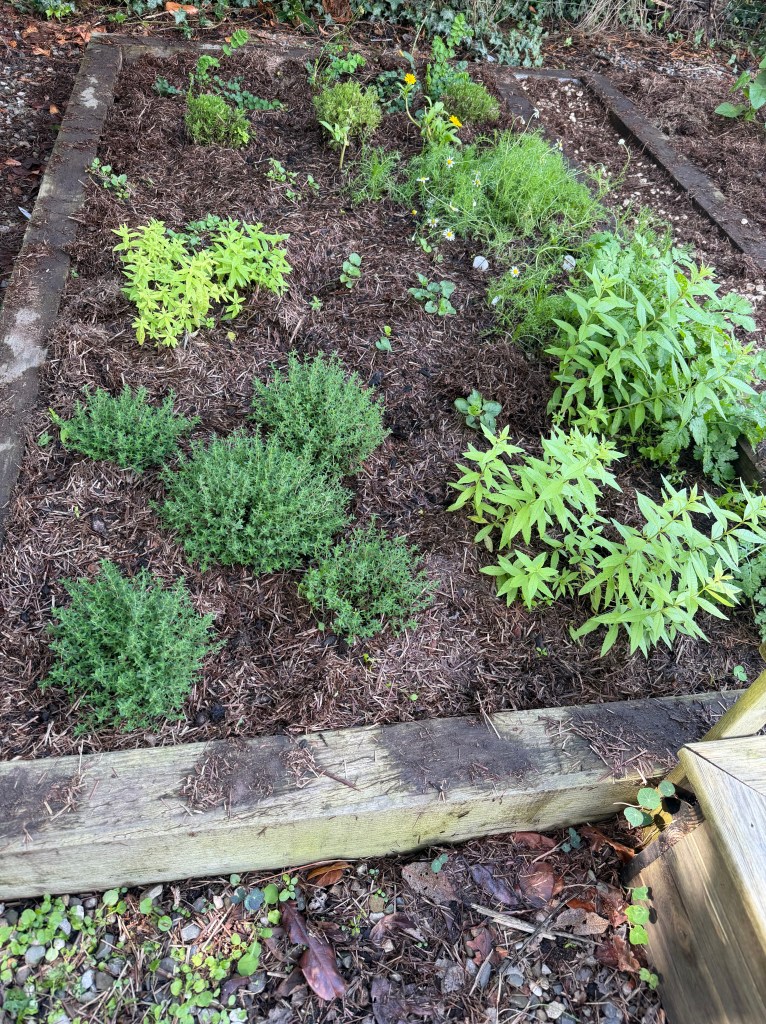
This bed represents the practical side of the traditional physic garden: plants that might once have been kept close to the house for everyday household remedies.
Many of these herbs had several uses at once. They could be taken as infusions, used externally on the skin, added to food, used for fragrance, or simply valued as familiar plants of the cottage garden.
The plants in this bed were chosen to reflect that mixture of usefulness, tradition and domestic medicine.
Roman Chamomile
Chamaemelum nobile
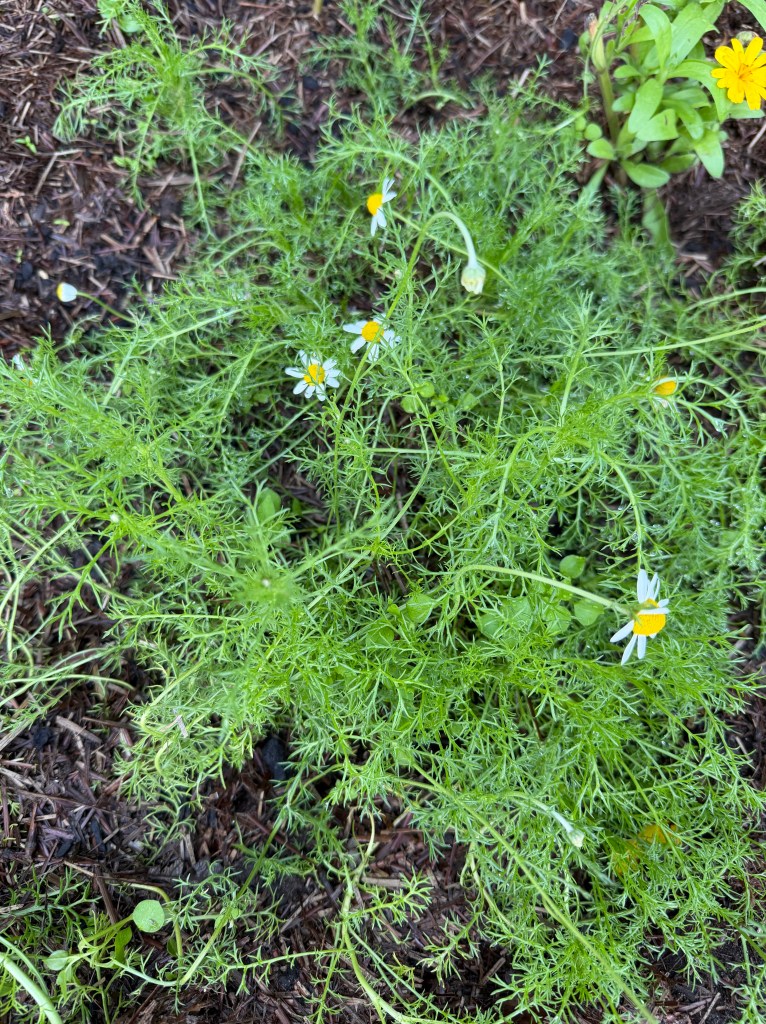
Roman chamomile has a very long history as a medicinal and aromatic herb. Its flowers and foliage were traditionally used in infusions for digestive discomfort, restlessness and minor aches.
It was also applied externally in preparations for irritated skin and has long been valued for its distinctive apple-like fragrance.
In the garden, Roman chamomile forms low-growing, spreading mats and releases its scent when the foliage is touched.
Traditional uses: digestive complaints, calming infusions, skin preparations.
Active compounds / modern evidence: Roman chamomile contains volatile oils including bisabolol derivatives and other aromatic compounds, as well as flavonoids. These have shown anti-inflammatory and antispasmodic activity in laboratory studies. There is some evidence that chamomile preparations can have a mild calming effect and may help with minor digestive symptoms, but the strength of clinical evidence is modest and varies between preparations.
Caution: chamomile can occasionally cause allergic reactions, particularly in people sensitive to other members of the daisy family.
Calendula
Calendula officinalis
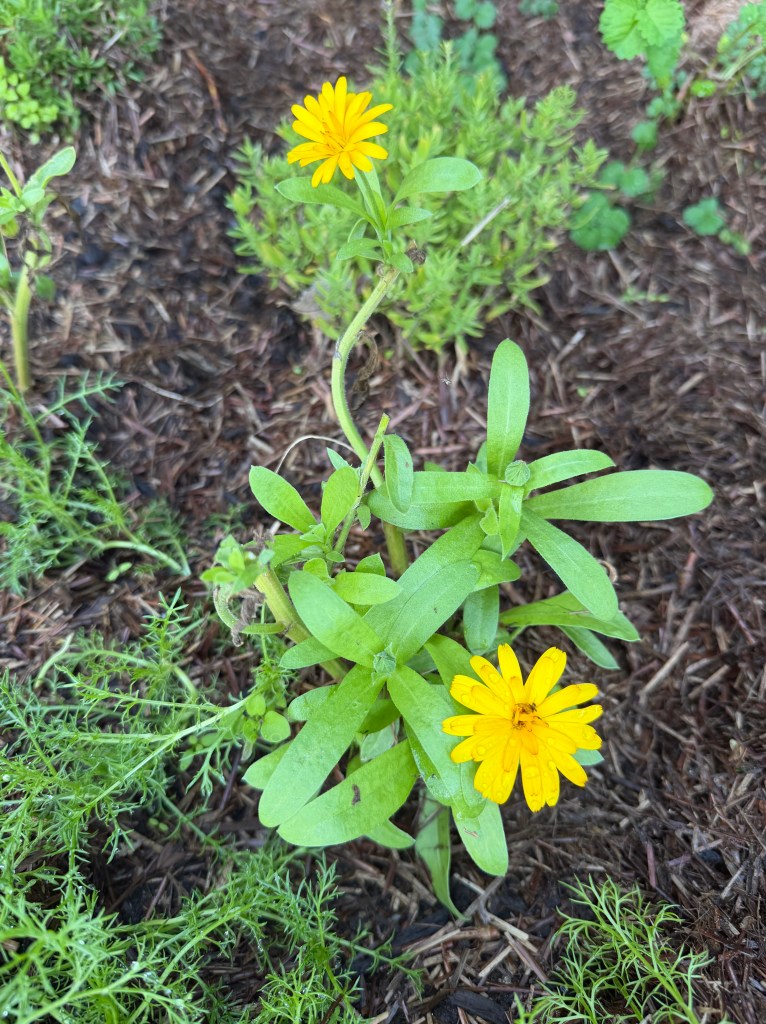
Calendula, or pot marigold, was one of the most familiar plants of the traditional cottage garden.
The bright orange or yellow petals were used in ointments and washes for minor wounds, sore skin and inflammation. Calendula petals were also added to food and were sometimes used as a colouring or inexpensive substitute for saffron.
Its long flowering season made it both a useful medicinal plant and a cheerful garden favourite.
Traditional uses: minor wounds, inflamed skin, soothing ointments and washes.
Active compounds / modern evidence: calendula flowers contain triterpenoids, flavonoids and carotenoids, several of which show anti-inflammatory and wound-healing activity experimentally. There is some supportive clinical research, but studies have generally been too small or methodologically weak to establish a definite therapeutic effect. The EMA nevertheless accepts calendula as a traditional herbal medicine for minor skin inflammation and assisting the healing of minor wounds.
Caution: allergic skin reactions are possible, particularly in people sensitive to plants in the daisy family.
Hyssop
Hyssopus officinalis
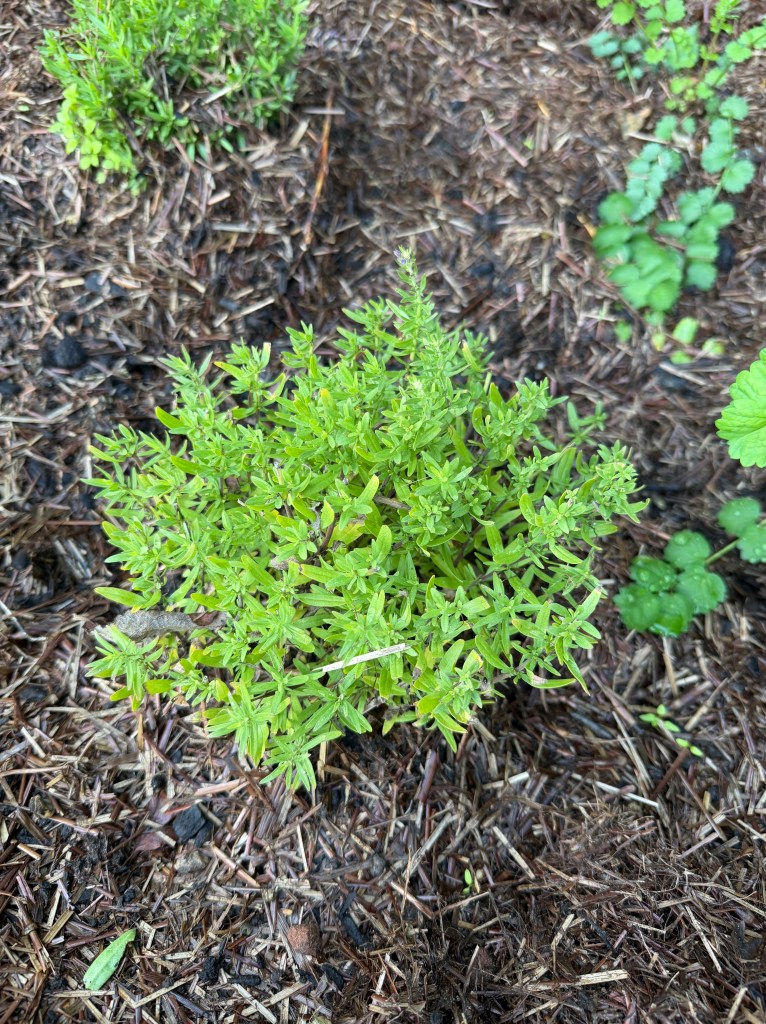
Hyssop has been grown in European gardens for centuries and was traditionally associated with both medicine and purification.
Infusions were used for coughs, colds and digestive complaints, while the strongly aromatic leaves also made the plant useful as a culinary herb.
Hyssop is particularly attractive to bees and other pollinating insects when in flower.
Traditional uses: coughs, respiratory complaints and digestion.
Active compounds / modern evidence: hyssop contains volatile compounds including pinocamphone, isopinocamphone and β-pinene, as well as flavonoids such as apigenin and luteolin derivatives. Extracts show antimicrobial and other biological effects in laboratory studies, but convincing clinical evidence that hyssop treats respiratory or digestive disease is lacking.
Caution: concentrated hyssop essential oil should not be taken internally. Pinocamphone has neurotoxic and convulsant properties at sufficient doses, and hyssop oil has been associated with seizures.
Self-heal
Prunella vulgaris
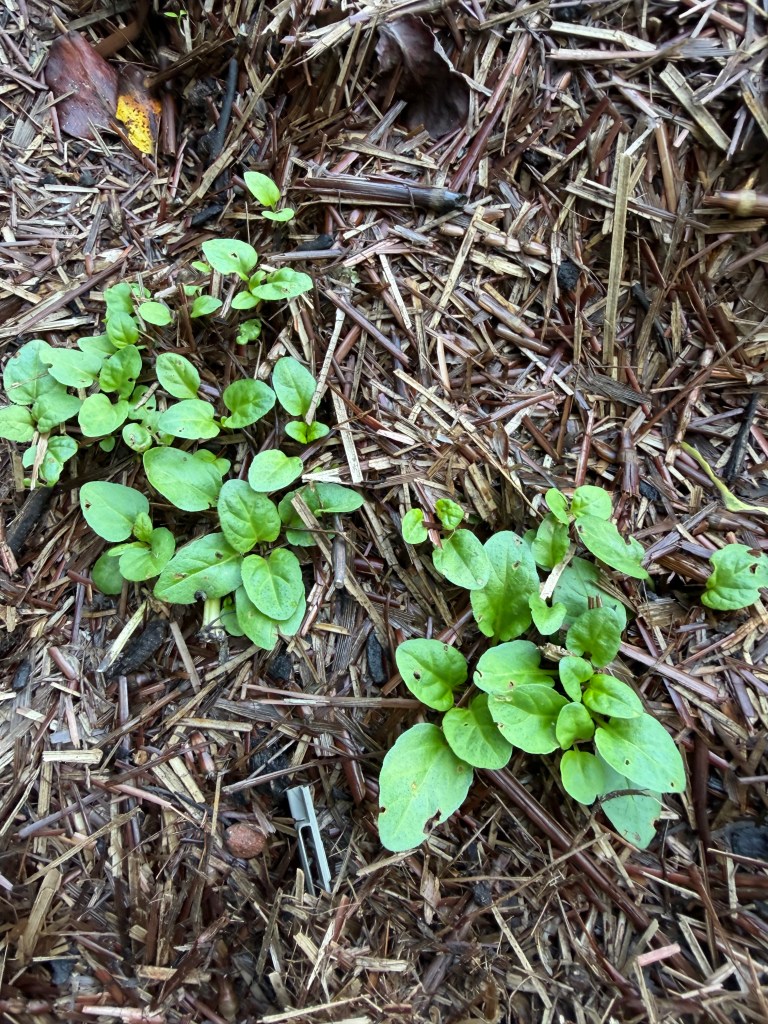
The name “self-heal” gives a strong indication of this plant’s historical reputation.
A common British wildflower, it was traditionally applied to cuts, bruises and minor wounds. Leaves were crushed or made into washes and poultices, while infusions were also taken internally.
It was once so widely associated with wound treatment that it acquired several old names referring to healing and injury.
Traditional uses: cuts, bruises, minor wounds and sore throats.
Active compounds / modern evidence: self-heal contains numerous biologically active substances, including rosmarinic acid, ursolic acid, oleanolic acid, flavonoids and triterpenoids. Laboratory and animal studies demonstrate anti-inflammatory, antimicrobial and immunological effects. These findings give some biological plausibility to its traditional reputation, but there is not yet strong clinical evidence in humans for the traditional wound-healing uses.
Caution: its traditional reputation is considerably stronger than the current clinical evidence, so medicinal use should not be assumed to be proven simply because active compounds have been identified.
Sweet Violet
Viola odorata
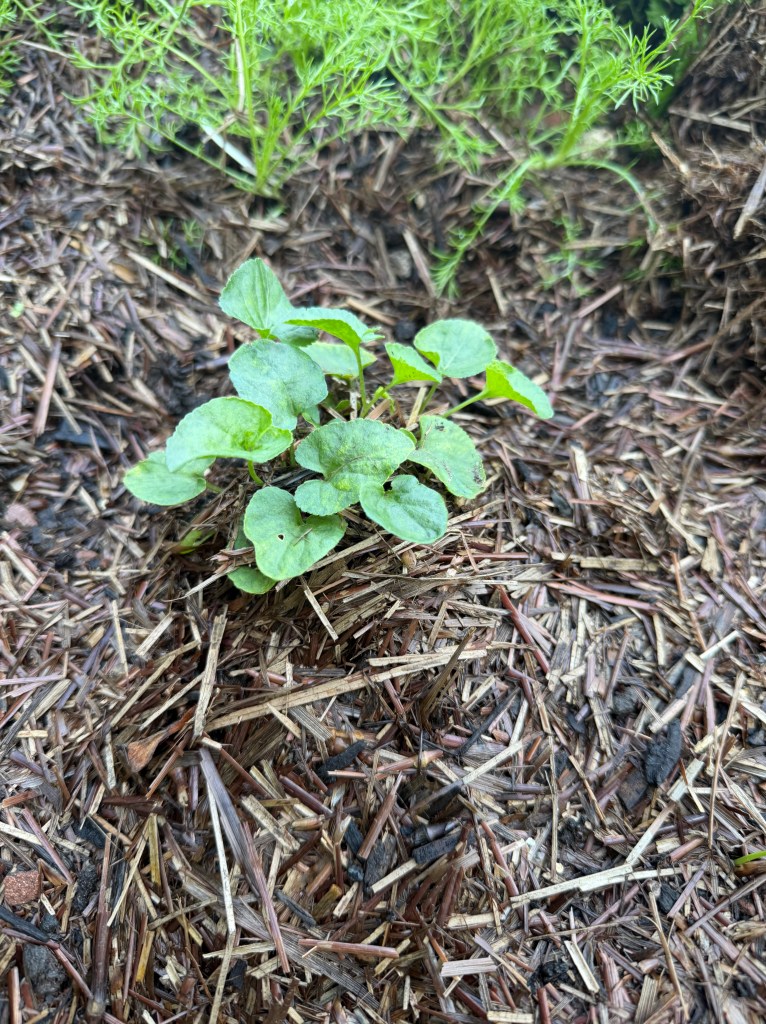
Sweet violet has been valued for centuries for both its fragrance and medicinal properties.
The flowers were traditionally used in syrups and preparations for coughs and sore throats. Violet preparations were also used for their mild soothing and cooling qualities.
The flowers were additionally used in confectionery, perfumes and decorative cooking.
Traditional uses: cough preparations, sore throats and soothing syrups.
Active compounds / modern evidence: sweet violet contains flavonoids, saponins, alkaloids and specialised cyclic peptides known as cyclotides. Extracts have demonstrated anti-inflammatory, antimicrobial and other pharmacological effects experimentally. However, modern clinical trials of Viola odorata are sparse, so its traditional respiratory uses remain much better established historically than scientifically.
Caution: evidence from laboratory studies should not be taken as proof that homemade violet preparations have a clinically useful medicinal effect.
Lemon Balm
Melissa officinalis
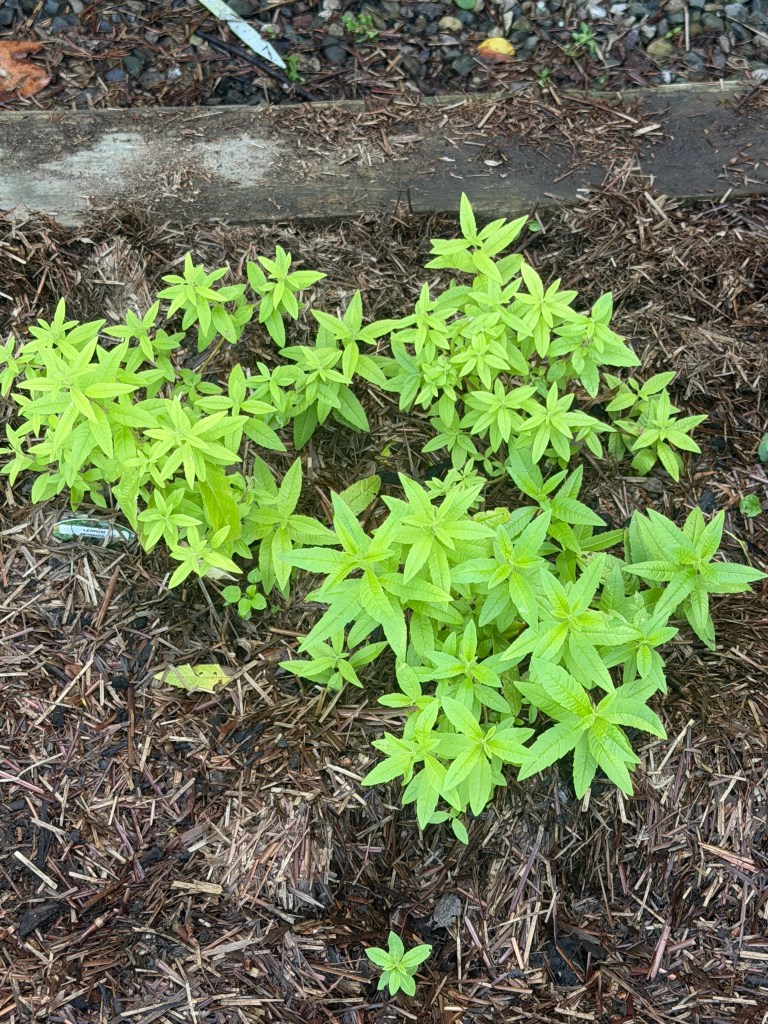
Lemon balm has a long history as a calming and digestive herb.
Its lemon-scented leaves were traditionally made into infusions for nervousness, disturbed sleep and indigestion. It was also an important ingredient in several historic herbal preparations and cordials.
The plant’s botanical name, Melissa, comes from the Greek word for honeybee, reflecting its strong attraction to bees.
Traditional uses: anxiety, sleep, indigestion and aromatic cordials.
Active compounds / modern evidence: lemon balm contains rosmarinic acid as well as volatile constituents including citronellal and related terpenes. There is experimental evidence for several biological effects and some small human studies have suggested benefits for anxiety and sleep. However, the clinical evidence remains limited. The EMA accepts lemon balm on the basis of longstanding traditional use for mild symptoms of stress, aiding sleep, and mild digestive problems such as bloating and flatulence.
Caution: generally well tolerated in ordinary culinary quantities, although concentrated herbal preparations should still be regarded as pharmacologically active products.
Salad Burnet
Sanguisorba minor
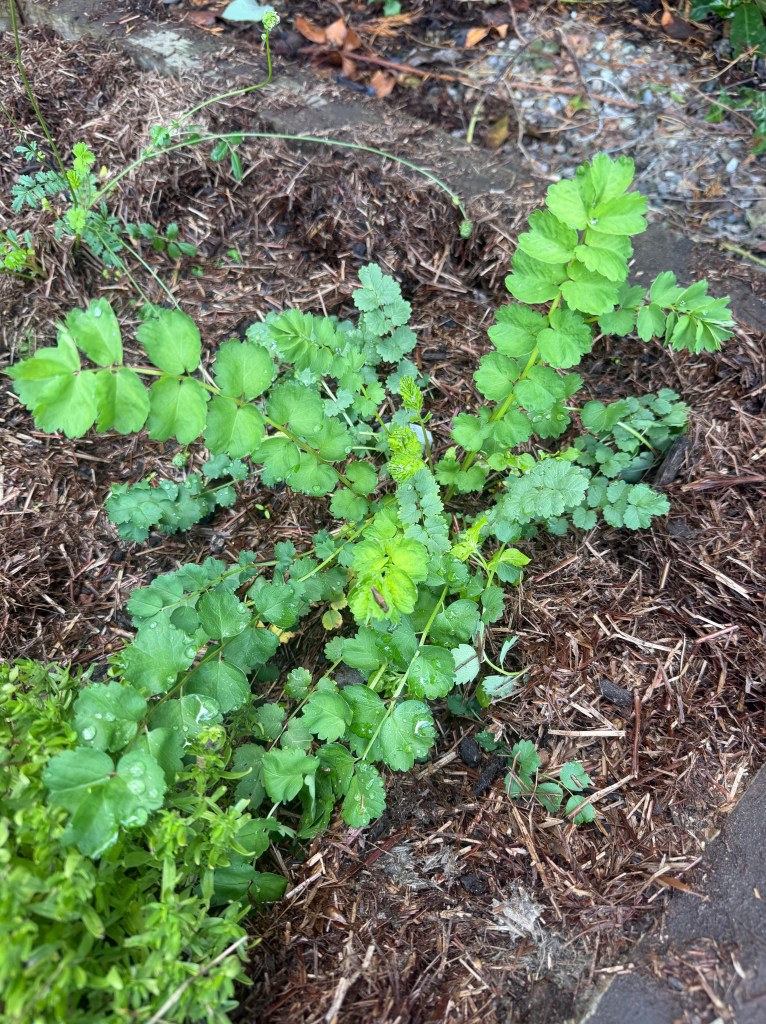
Salad burnet was valued both as a culinary herb and as a medicinal plant.
Its young leaves have a fresh, slightly cucumber-like flavour and were traditionally added to salads, sauces and drinks.
Like its relative great burnet, the plant was also associated with the treatment of bleeding and wounds. The name Sanguisorba derives from Latin words referring to blood and absorption.
Traditional uses: wound preparations and digestive remedies.
Active compounds / modern evidence: salad burnet contains substantial quantities of tannins and other polyphenols, together with flavonoids including compounds such as rutin and apigenin. Extracts have shown antioxidant, antimicrobial and enzyme-inhibiting activity in laboratory studies. These are genuine biological effects, but there is presently very little convincing human clinical evidence that Sanguisorba minor treats bleeding or other disorders.
Caution: this is a good example of a plant in which interesting pharmacology exists, but the historical medicinal claims go substantially beyond what has been demonstrated clinically.
Common Thyme
Thymus vulgaris
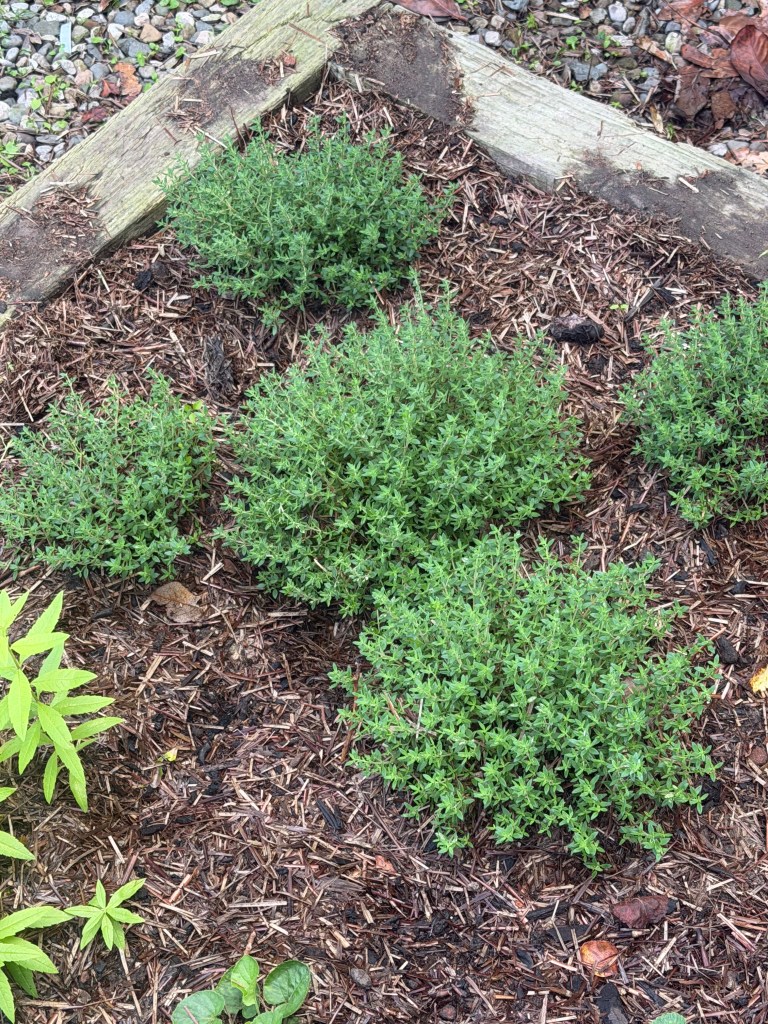
Thyme has been one of the most important household herbs for centuries, combining culinary use with a strong medicinal tradition.
Infusions and preparations containing thyme were commonly used for coughs and respiratory complaints. The herb contains the aromatic compound thymol, which has antiseptic properties.
Its compact growth and strongly scented foliage also make it an ideal plant for the front of a physic or cottage garden bed.
Traditional uses: coughs, respiratory complaints, antiseptic preparations and digestion.
Active compounds / modern evidence: thyme essential oil contains thymol and carvacrol, compounds with well-demonstrated antimicrobial activity in laboratory studies. Thyme preparations also have plausible effects on bronchial secretions and airway smooth muscle. There have been human trials for cough, but the evidence for thyme alone is not strong enough to establish conventional clinical efficacy. The EMA recognises its traditional use for productive cough associated with colds.
Caution: culinary thyme is quite different from concentrated thyme essential oil. The latter can irritate the skin and mucous membranes and should not be treated as though it were simply a stronger version of thyme tea.
Feverfew
Tanacetum parthenium
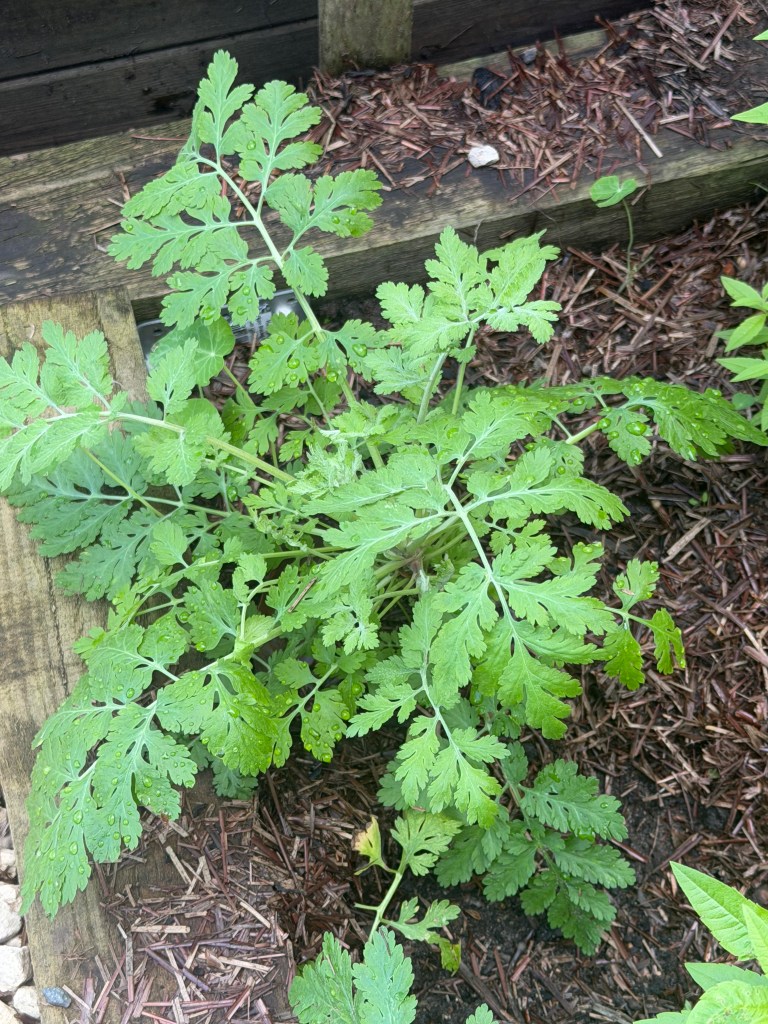
Feverfew has a long history as a medicinal herb, particularly for headache, fever and inflammatory complaints. In later herbal practice it became especially associated with recurrent headaches and migraine.
Traditional uses: headache, migraine, fever, menstrual discomfort and inflammatory complaints.
Active compounds / modern evidence: feverfew contains sesquiterpene lactones, particularly parthenolide, together with flavonoids and volatile compounds. Parthenolide has genuine anti-inflammatory effects in laboratory studies. Clinical trials suggest that regular feverfew may reduce the frequency of migraine attacks in some people, although results are mixed and the benefit appears modest rather than dramatic.
Caution: fresh feverfew leaves can cause mouth ulceration and irritation, and the plant can cause allergic reactions in people sensitive to the daisy family. It should also be used cautiously with medicines that affect bleeding.
Historical note: feverfew is a nice example of a plant where an old reputation for treating headache has not simply disappeared under modern scrutiny — there is at least some clinical evidence that the traditional use may have had a real pharmacological basis.
A Living Medicine Chest
Taken together, the plants in this bed illustrate how closely food, medicine and everyday domestic life once overlapped.
A single cottage garden might provide herbs for cooking, soothing teas, treatments for minor wounds and coughs, fragrant plants for the home and flowers for pollinating insects.
Today, they are grown here primarily to tell that story.
Please note: the historical uses described on this page are included for educational interest and should not be taken as medical advice. Some herbal preparations can cause adverse effects or interact with medicines.
Location
123 Example Street
San Francisco, CA 12345
Hours
Monday—Friday
8am — 6pm
Contact
hi@example.com
(123) 456-7890
Designed with WordPress

